
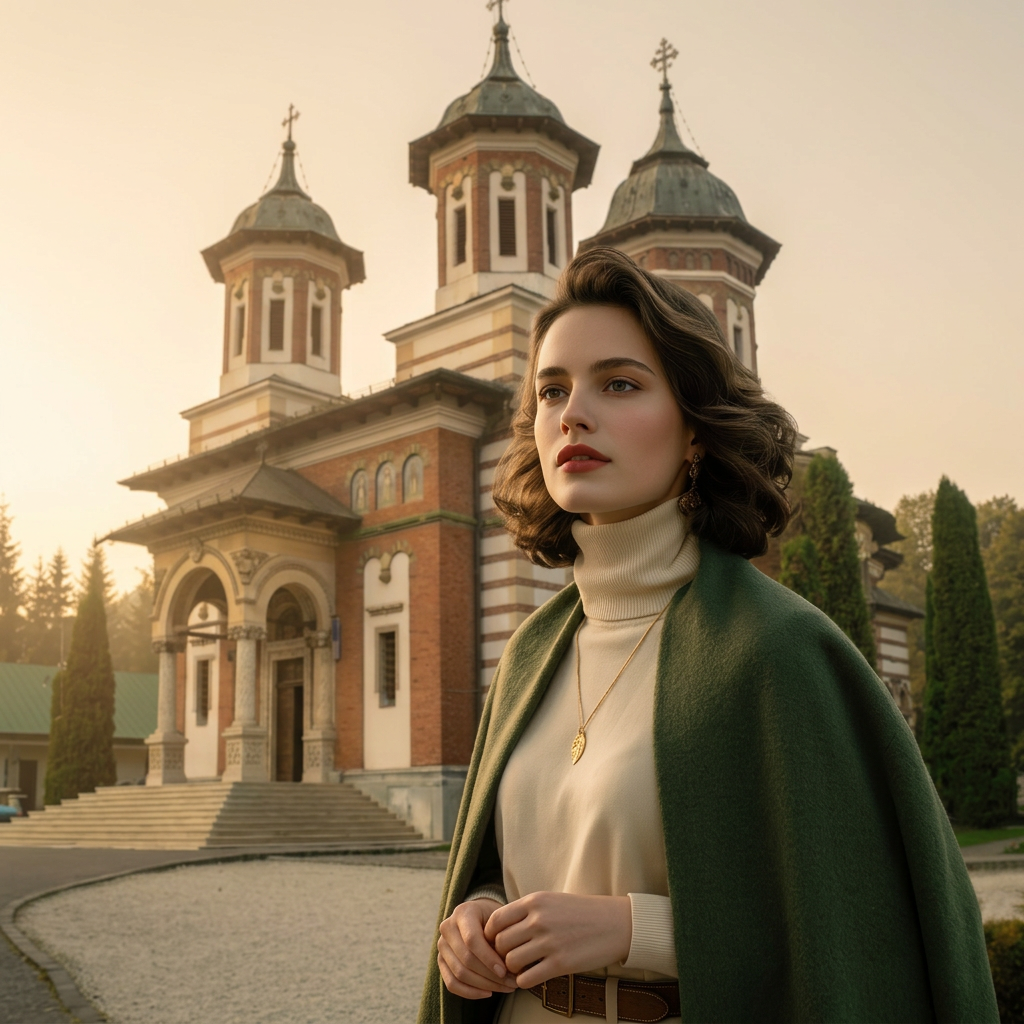
A Foundation Carried Beyond the Mountains
In 1695, Prince Mihail Cantacuzino returned from his pilgrimage to Mount Sinai in Egypt, transformed by the sacred experience of the place. As an act of gratitude and devotion, he built a monastic complex in the heart of the Carpathians and gave it the name of the holy mountain — Sinaia. Thus, a sacred echo crossed distances and centuries, and gave the town its present-day name.
The monastic complex comprises two distinct churches. The Old Monastery, founded in 1695, bears the architecture characteristic of the Brâncovan style — a unique synthesis between the Western Renaissance and Eastern Byzantine traditions, marked by carved arcades, elegant porches, and floral stone ornaments. The New Monastery, built between 1842–1846, served as a royal residence for the Romanian royal family during times of retreat and prayer.
Brâncovan Style — A Unique Synthesis
The Brâncovan style — named after the ruler Constantin Brâncoveanu — represents the pinnacle of Romanian medieval art. At Sinaia Monastery, this aesthetic is expressed in columns carved with plant motifs, the trilobed arches of the porch, and portals adorned with vine scrolls chiselled into Sinaia stone.
The monastery museum houses a precious collection of Byzantine art: icons painted on wood from the 17th–18th centuries, illuminated manuscripts, liturgical embroideries, and cult objects donated by founders. Among its highlights are a Gospel book bound in gilded silver and a rare collection of copper engravings depicting scenes from the Lives of the Saints.
“Cantacuzino brought Sinai to the Carpathians — and with it, the sacred silence of the desert.”
Plan your visit
Dress code: Modest attire required. Shoulders and knees must be covered. Women are kindly asked to wear a headscarf when entering the church.
Spiritual Significance
Sinaia Monastery is not only an architectural masterpiece — it is the spiritual heart of the town. For more than three centuries, Orthodox monks have lived and prayed here, keeping alive an unbroken tradition of worship and service. Liturgical services are held daily at sunrise and sunset, and the sound of the bells spills across the mountain valleys like a voice of time itself.
The place has drawn pilgrims, kings and philosophers alike. King Carol I would visit the monastery during periods of reflection, and Queen Marie left precious donations to its collection of sacred art. Today, thousands of visitors come each year not only for the beauty of the place, but for the deep peace its centuries-old walls seem to breathe.